
Memory and motherhood in Yang Lina’s ‘Song of Spring’
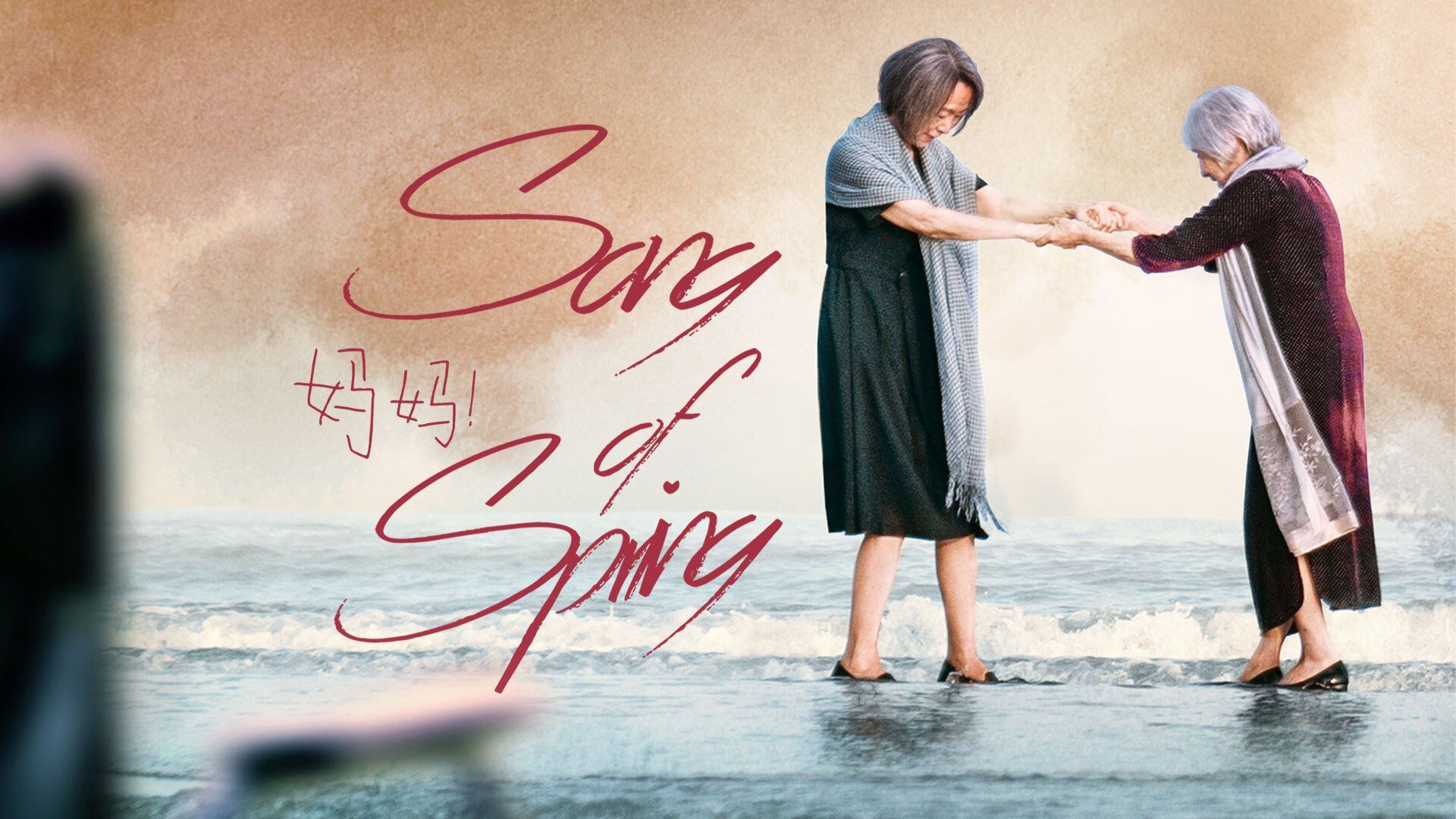
In Song of Spring (妈妈), a mother and daughter wade through the tides of life, both inexplicably approaching their twilight years. The film traces their beautiful bond of motherly love and daughterly attachment as it evolves across past memories, present realities and future apprehensions – both celebrating and refuting the Chinese concept of familial attachment (qin qing) as it exists in Chinese society today.
The daughter, Feng Jizhen (played by Xi Meijuan) is a sixty-five year old university teacher who’s dedicated to tracing what remains of her late father’s archaeological research and caring for her aged mother, Jiang Yuzhi (played by Wu Yanshu).
Despite being the protagonist, Feng’s quotidian life is so consumed in her roles of a breadwinner, caregiver and a researcher that she gives away little about her own dreams, aspirations and desires. Instead, we see Feng primarily as a daughter attending to her mother’s eccentric child-like behaviour with a strict parental tone that the audience can’t help but adore. In this relationship, it appears that the roles are reversed: Feng is more like a mother, while Jiang acts like a playful daughter. Yet, in being the nourisher, Feng is also the nourished, as Jiang is the only one she shares familial attachment with; her only source of comfort.
However, Feng’s world collapses when she is diagnosed with Alzheimer’s disease. Knowing that she will soon be unable to provide for her mother, she makes arrangements for Jiang to be housed in a nursing home and prepares to be separated from her. But, as Jiang says, “every mother is a wolf-mother and protects her cub when in need”. On learning about Feng’s condition, her mother refuses to leave and becomes her daughter’s caretaker instead. Meanwhile, as Feng’s health worsens and she is relieved of her duty-bound commitments, she finds herself growing more akin to a child.
This change in the relationship is accompanied by oscillations between Feng’s dreams, illusions, past memories and present experiences. Marked by non-linear camera movements and longer screen durations, these scenes provide viewers with the space to emotionally connect with her and learn more about her life. Much like her beloved father – an adept archaeologist who strongly believed in the power of exploring the past to understand the present – the film digs deep into Feng’s personal history to shed light on her present reality.
As the boundaries between past and present blur, reality itself grows fluid. That volatility is fittingly illustrated through water – a recurrent motif in the movie. It is by the river banks that Feng first notices, in her reflection, the signs of her ill-health. It is at the lakeside where she stops recognising her mother. It is also mentioned that her father likely drowned en route to his archaeological expedition. It’s unsurprising, then, that her mother – the only constant throughout her turbulent experiences – tries to avoid the rain at all times and makes every attempt to prevent Feng from getting drenched. Yet, even she eventually revels in the ocean waves at the beach, conquering her fears alongside Feng in the final scene. The film showcases some brilliant cinematographic techniques in these symbolic moments, especially when capturing the reflection of mother and daughter in the rippling waters.
Yet, as Feng’s Alzheimer’s grows worse, it becomes harder to tell what’s real and what’s not. For instance, there’s a scene where a thief she helped, repays her by taking care of the mother-daughter duo for some time. One is left to comprehend if it really happened or was just imagined. The yellow shade of lighting gives the scene a dream-like experience much like the joy of the duo which suddenly changes with the thief’s abrupt departure. Likewise, the non-linear camera movements that capture the serene mis-en-scene of the garden and the rain pattering over the leaves make them into the salient spectacles of the film, becoming a “special effect” that provides an emotional interlude in the journey and reinstates a sense of rootedness to the reality.
Despite its surreality, the film is committed to narrating the daily lives of Feng and Jiang without the melodrama prevalent in Western films as well as Chinese cinema. Characterised by rhetorical excess and hyperbole, melodrama is centred on an affective turn-of-events. Song of Spring does draw on tropes familiar to the audience, but uses them to surprising effect. In one scene, for instance, Feng panics when she finds her mother motionless on the ground – only to soon realise that her mother was playing a prank. The film does this throughout, subtly creating expectations only to defy them – a reminder that reality is one big spectacle after all.
If, as the film shows, real life itself is the greatest form of drama, then the most tangible aspects of it are emotions, which permeate every scene and affect both characters and audiences alike. Much of that emotional poignancy comes from Jiang, Feng’s mother, who is an epitome of resilience as she assumes the pivotal responsibility of caring for a daughter that is inevitably forgetting their relationship. In a moment of lucidity, Feng absently mutters, “谢谢, 妈妈 (Thank you, Mother)”, to which her mother replies, ”谢谢,我的女儿 (Thank you, my daughter)”.
The film is an embodiment of the term qin qing (亲情), which denotes the culture of strong familial ties and parental affection in China, sometimes going beyond to the connections with the wider community. Qin qing has become a sentimental trope in many Chinese films, centred around a youth’s quest to regain a sense of home as they yearn to find their place in the rapidly changing landscapes of China. Against the backdrop of China’s aging society, this film reconceptualises sentimentality for an elderly population. It shows Feng’s quest to find solace, finally culminating in the warmth of her mother’s affection. The choice of two women protagonists above the age of sixty is unconventional for any film genre. And yet, the beautiful narration of the bond ensures that the audience identifies with the protagonists and shares their emotions.
Heartwarming as that may be, qin qing is premised on an idealised notion of filial piety in Chinese society. In the context of the erstwhile one-child policy in China, responsibility towards the family elders was often relegated to a single child. On one hand, that made children naturally inclined to take care of their parents out of an intrinsically deep connection to them. On the other, it cast their organic impulses into culturally necessary obligations.
The blurred lines between desires and duty-bound commitments maps on to the tension between personal agency and social pressures. For example, in the film, Feng’s desire to continue her father’s legacy gradually develops into a fixation that constrains her from living. It is only because of her memory loss that she is eventually freed from this self-imposed duty. In a subtle way, the film thus portrays an unsettling tension at the heart of contemporary Chinese society.
In exploring the intricate dynamics of the mother-daughter relationship and the difficulties of shirking off cultural norms, the film touches on themes that appeal to a wide-ranging audience, as it did for the diverse viewers at the London screening of the Beijing International Film Festival. Its subtle expression of deep familial ties transcends borders, making a story rooted in the Chinese context strike a chord with people around the world.
About the author
Vedika Kedia is a graduate of Lady Shri Ram College for Women, New Delhi. She pursued her Master in China Studies as Yenching Academy scholar at Peking University (北京大学) followed by a Master in Higher Education at the University of Oxford. Drawn from her varied experiences, Vedika’s research focuses on a comparative understanding of Chinese and Indian societies. More about her research interests can be found here.