The Quiet Dystopias of ‘Patchwork Dolls’
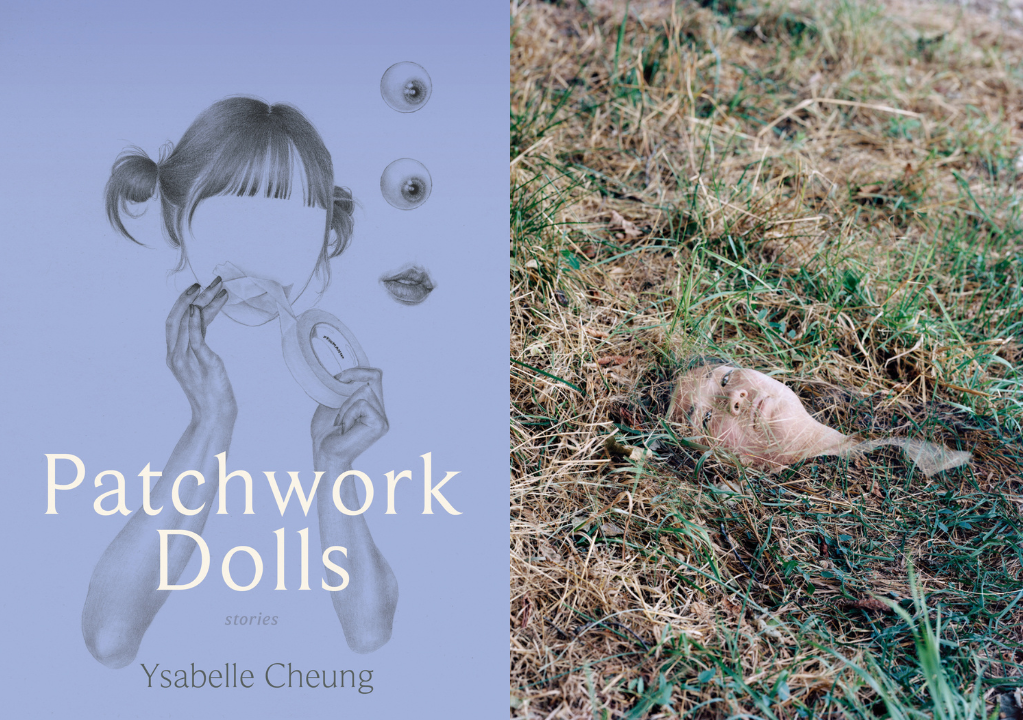
“The woman who now has my old face does not know this story, she does not know, either, of how when I was twenty-one, a man followed me home and tried to rush me at my building door…” writes ‘Patchwork Dolls’, the title story of Ysabelle Cheung’s debut short story collection. In it, a young East Asian woman sells parts of her body to wealthier, often white, clients. The idea of “patchwork” - of fragmentation and reconstruction - runs through the story, encapsulating the collection’s central concerns: migration, dystopia, and the uneasy entanglement between the body and technology.
Cheung, a Hong Kong-born writer working between Hong Kong and the West, brings a distinctly transnational perspective to her writing. Comprising ten stories set across Hong Kong and the United States, Patchwork Dolls centres on East Asian female protagonists navigating identity across borders and life stages. Even in stories where characters stay at their home - such as ‘The Reader’, set in Hong Kong - the protagonists feel estranged and displaced.
This sense of dislocation is sharpened by the contemporary political context linking Hong Kong and the West. In recent years, the erosion of democracy in Hong Kong has prompted waves of emigration to countries like the UK and Canada, while immigration policies in the US have been criticised as racist and inhumane. These realities, though not directly referenced in Cheung’s stories, are permeated by the same sense of fear and quiet pessimism, which feeds into the collection’s dystopian imagination.
Each story constructs a world that feels both speculative and disturbingly familiar. Some, such as ‘Please’, ‘Get Out’ and ‘Dance and Not in the Neighbourhood’, explore authoritarianism and surveillance. Others, including ‘Find Your Spirit’, ‘Patchwork Dolls’, and ‘The In-Between’, engage with darker technologies, from tracking deceased souls to cloning the dead. ‘Patchwork Dolls’, where poorer East Asian women sell their organs to affluent white clients, also lays bare existing racial hierarchies and how technologies may further entrench them. Although stories like ‘The Reader’ remain closer to the present, they depict a city decaying and losing meaning. All the imagination is an extension of the contemporary world, rather than a distant future.
When Cheung portrays the dystopian world, she resists a fully explained or expansive world-building. Instead, she adopts an intimate, character-driven approach. Her stories focus closely on one or two individuals, allowing the broader dystopian structures to remain partially obscured. In ‘Find Your Spirit’, for instance, the protagonist, “you”, uses an app to track the ghost of her deceased twin sister. Obsessed with the app, she believes her sister is indeed wandering around the city. It is unknown how many people in that world use the app, but it precisely captures how technology governs human emotions. It distorts memory, reshapes relationships, and traps the user in unresolved loss.
This personal approach is one of the collection’s greatest strengths. Cheung frequently employs the second-person perspective, addressing the protagonist as “you”. It draws readers into the narrative, making it all the more unsettling. At the same time, Cheung’s writing is restrained. Rather than describing the character’s feelings through sophisticated vocabularies, she simply documents their actions and daily routine. The tone is calm, almost detached. While the readers are involved in the story, they are positioned as observers complicit in the characters’ sorrow. It creates a subtle but pervasive sense of depression that lingers long after the read.
Formally, Cheung also rejects conventional ways of storytelling. For example, ‘The Reader’ is an interactive story that allows readers to choose pathways by turning to different pages. ‘To My Great Granddaughter, Who Will Find This Letter When I Am Dead’ unfolds through letters and recipes, blending personal memory with cultural inheritance.
The opening story, ‘Mycomorphosis’, is particularly striking. It follows a young woman who has fungi growing in her ear. It is initially discomforting, but she is gradually obsessed with how it lets her escape from reality. Blending body horror with surrealism, the story captures a desperate desire to withdraw from the pressures of everyday life. Its unsettling imagery and psychological intensity set the tone for the collection: strange, imaginative, and disturbingly plausible.
Patchwork Dolls is not a comforting collection. It is thought-provoking and deliberately disquieting, inviting readers into worlds that feel at once fantastical and uncomfortably close to home. Rather than offering clear resolutions or hopeful futures, Cheung captures a prevailing mood of the present world - one marked by uncertainty, dislocation, and quiet despair.
Patchwork Dolls can now be purchased online on Amazon and Bookshop.org.
About the writer
Angel Sun is a freelance journalist passionate about human-interest and long-form feature writing in both Chinese and English. Her work, mainly exploring East Asian diaspora and gender issues, has appeared in Initium Media. She also writes film reviews for The Indiependent and news articles for British local newspapers like Hackney Gazette. She is deputy social editor at NüVoices. View her portfolio and LinkedIn as a fresh journalist here.
About the editor
Lijia Zhang is a factory-worker-turned writer, social commentator and public speaker. Her articles have appeared in The Guardian, The South China Morning Post, Newsweek, and The New York Times. She is the author of the critically acclaimed memoir “Socialism Is Great!” and her debut novel Lotus follows a prostitute in China. Lijia has lectured at many conferences, institutions and universities around the world. She is a regular speaker on the BBC, Sky TV, CNN and NPR.
Photo credit: Tonatiuh Ambrosetti